
Perimeter Intrusion Detection for Data Centers
How layered fence, ground and video sensors with alarm verification give data centers reliable perimeter detection and fewer nuisance alarms across every site.
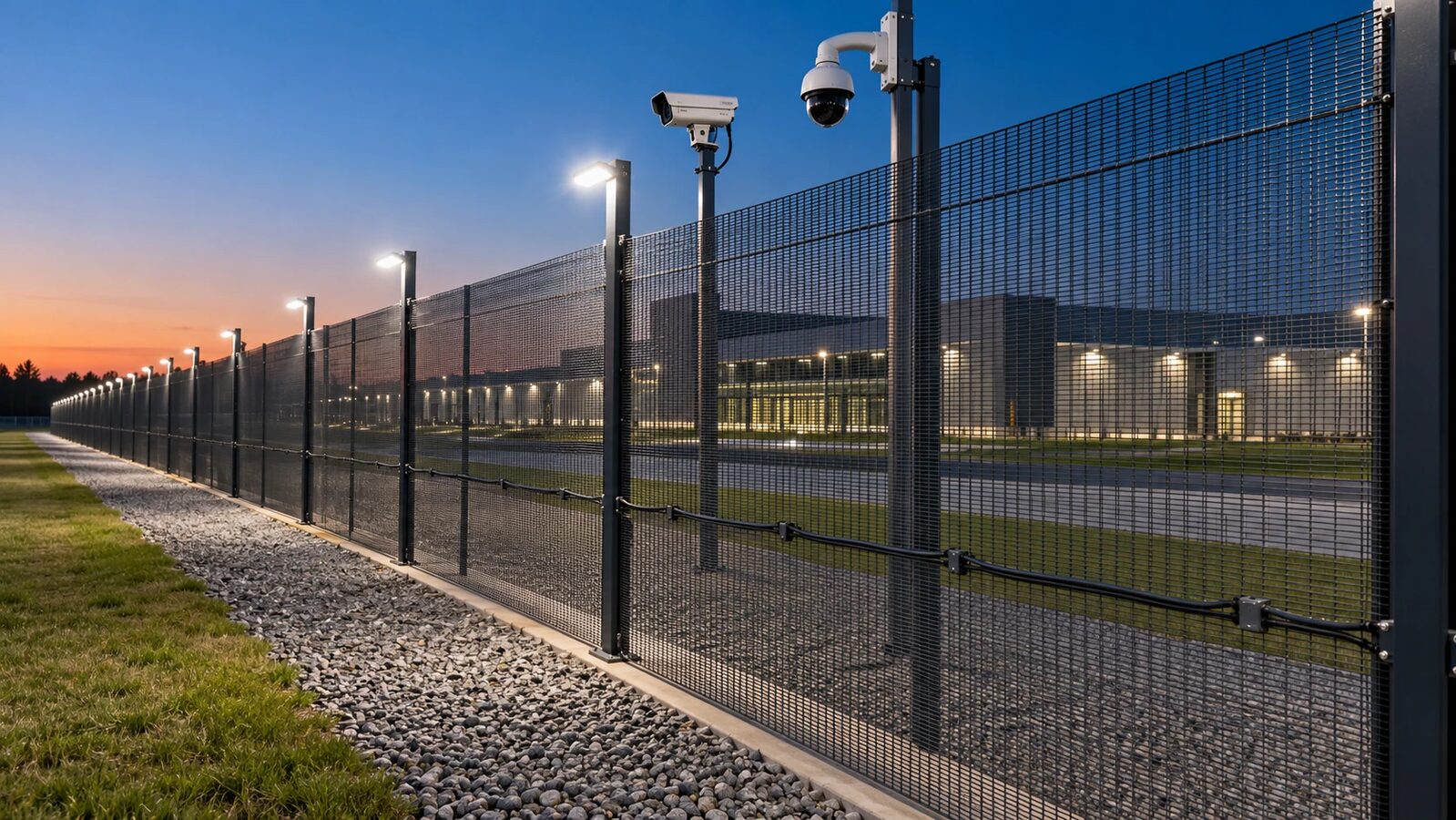
A data center perimeter is the first place an intruder can be stopped and the last place most security teams want to spend operator attention. When sensors alarm on wind, rain and wildlife, operators learn to dismiss them. When sites are built by different teams to different standards, the GSOC sees different behavior at every fence line. A reliable perimeter intrusion detection system (PIDS) needs both good sensors and a consistent way of using them.
The problem
Common symptoms in data center portfolios include:
- Nuisance alarms from weather, vegetation, temperature swings and animals, which erode trust in every alarm.
- Inconsistent designs from site to site, because each project team or integrator chose its own sensors and settings.
- No clear acceptance method, so nobody can say with confidence whether a zone actually detects a climb, cut or crawl.
- Weak sustainment, where calibration drifts and firmware ages after the installer leaves.
The approach
A layered PIDS combines different sensing methods so that one technology's weakness is covered by another, and so that alarms can be verified before an operator is asked to act.
Layered sensors
- Fence-mounted sensors, such as fiber optic, accelerometer or microphonic cable, detect climbing, cutting and lifting of the fabric.
- Buried or barrier sensors, and active infrared beams where suitable, detect crossing in open ground or along non-fence boundaries.
- Thermal and analytic video detects people approaching in darkness or poor weather and provides the picture an operator needs.
- LiDAR, fixed or 360 degree, tracks objects in three dimensions and helps qualify alarms in open areas.
Alarm verification
The design pairs a primary sensor with a verification sensor in each zone. A high-priority alarm is raised when both agree (dual-event qualification), while single-sensor events can be logged or shown at lower priority. Each alarm arrives in the access control or VMS platform with the zone on the map and the matching camera view.
Zoning by site type
Not every site looks the same. Sensor pairings are chosen by site archetype: a wide clear zone, a fence with no clear zone, ornamental fencing with vegetation, an active construction boundary or a temporary perimeter. A standard built on archetypes gives each site a known starting design rather than a blank page.
What it takes to get right
- Design and standards. A reference architecture, sensor selection matrix and installation playbook make installs repeatable across regions and contractors. A hands-on proof of concept at an operating site is the most reliable way to choose technologies.
- Integration. Sensor I/O, alarm logic, maps and camera call-up are configured in the existing security platform so operators keep one workflow.
- Acceptance testing. Each zone is tested against a written matrix covering detection (climb, cut, crawl), cross-zone behavior, fault, tamper, power and communications loss, video call-up and the end-to-end alarm pipeline to the operator.
- Soak period. A nuisance-alarm soak of at least two weeks under real weather shows whether tuning holds before the zone is handed over.
- Maintenance. Periodic re-validation with cut and climb tests, scheduled firmware recertification and a rolling maintenance record keep performance from drifting.
- Local rules. Electrical safety, radio licensing and privacy approvals vary by country and can change the base design.
- Third-party work. Trenching, civil work, fence repair and electrical supply are typically performed by the customer's or landlord's electrical and civil contractors, and network work by customer IT, unless IoTHS is contracted for them. A responsibility matrix makes the split explicit.
Where it fits
This approach suits hyperscale and colocation data centers, critical infrastructure and any portfolio that wants the same detection performance regardless of region or installer. See how one global program approached it in the global perimeter detection standard case study.
Next step
Contact us to discuss your perimeter standard, a proof of concept or acceptance testing at an existing site. Learn more about our perimeter solutions.
Talk to an engineer
Short call, quick requirements pass, and a recommended next step you can act on.
Contact us