
Building a Global Perimeter Intrusion Detection Standard
A framework for a global perimeter intrusion detection standard: reference architecture, site archetypes, sensor pairing, acceptance testing and lifecycle.
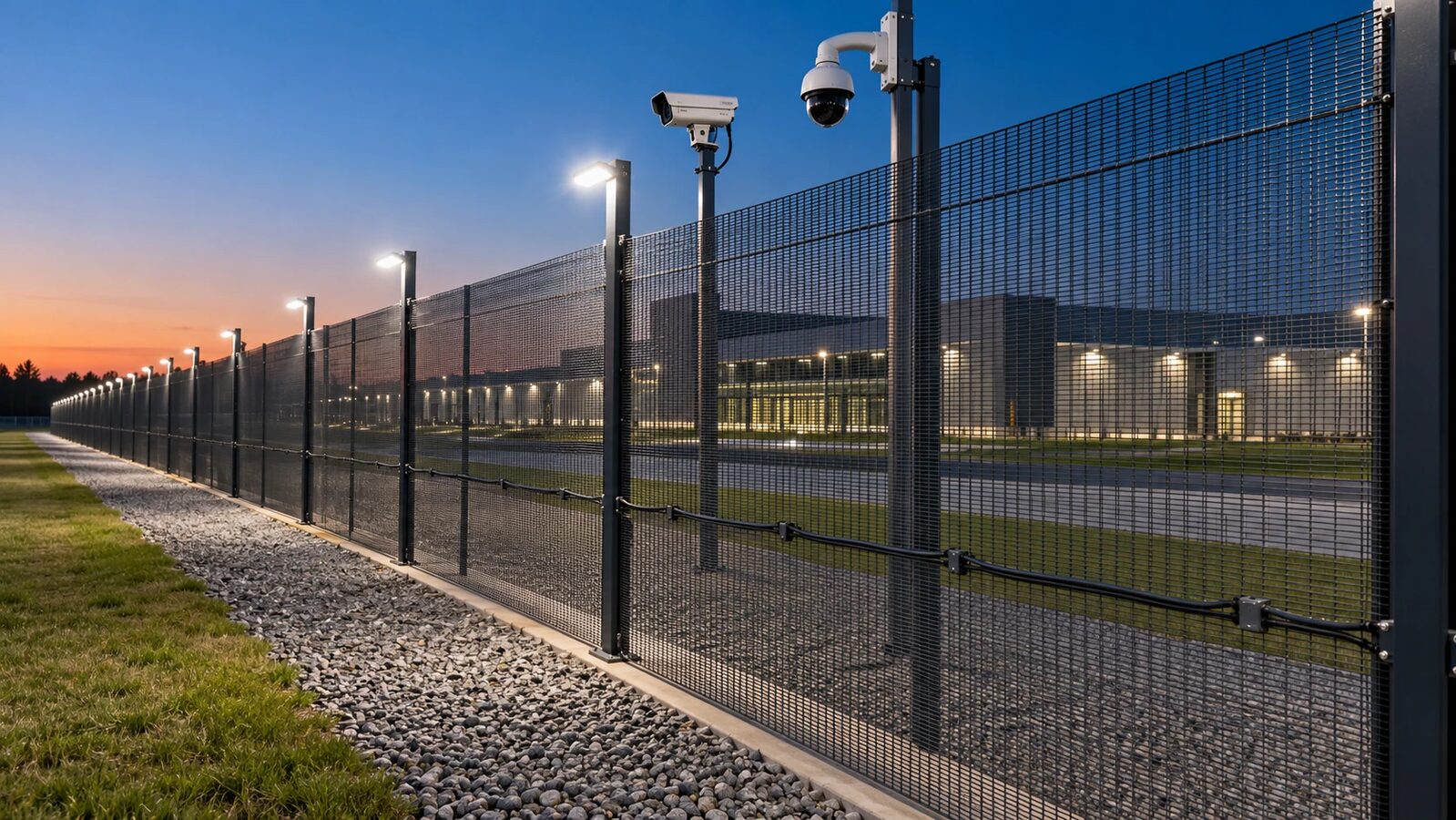
Executive summary
- Perimeter programs drift because each site is designed, bought and installed by a different team. A global standard replaces interpretation with a reference architecture, a selection matrix and a shared acceptance method.
- Technology choice should follow the site archetype (clear zone, non-clear zone, ornamental fence, construction, temporary), not the preference of whoever built the last site.
- Pairing a primary sensor with an independent verification layer, and qualifying alarms on two events, is the most reliable way to keep detection high and nuisance alarms low.
- Regional adaptation belongs in the standard from the start: electrical codes, radio rules and privacy approvals change the design, not just the paperwork.
- A standard is only as good as its acceptance test and its sustainment plan. Define the test matrix, the soak period, re-validation and firmware recertification before the first site goes live.
Why perimeter programs drift
Most enterprise perimeter estates were not designed as a system. They grew site by site, each delivered by a different project team, integrator and budget cycle. The result is familiar to anyone who runs a global security operations center (GSOC): one site generates a steady stream of wind alarms, another has a fence sensor nobody can recalibrate, and a third reports alarms in a format the central platform cannot map.
Common causes
- No shared design intent. Requirements live in individual RFQs rather than in a standard, so every project re-decides detection goals.
- Product-first selection. Sensors are chosen from a familiar catalog instead of from the conditions at the fence line.
- Undefined acceptance. "Commissioned" means the device powers up and reports, not that it detects a defined set of intrusions at a defined rate.
- No sustainment model. Calibration, firmware and vegetation management fall between facilities, IT and security.
What a standard should deliver
- Consistent detection performance regardless of region, vendor or site conditions
- Fewer nuisance and false alarms reaching operators
- One reference architecture that integrators can build without interpretation
- A clear, repeatable acceptance method
- A lifecycle plan that keeps sites performing after handover
Reference architecture
A useful reference architecture describes layers and interfaces, not products. That keeps the standard platform-agnostic and lets procurement compete each site without redesigning it.
Layers to define
- Detection layer: the primary sensor on or near the barrier (fence-mounted fiber or cable, buried sensors, beams, radar or LiDAR).
- Verification layer: an independent technology that confirms or rejects the primary event, most often thermal or visible video with analytics.
- Deterrence layer (optional): lighting, audio or signage triggered by qualified events.
- Processing and logic layer: the controller, programmable logic or integration platform that correlates events and applies qualification rules.
- Integration layer: the interface into the enterprise video management and access control platforms, so alarms, video and maps arrive in one operator workflow.
- Infrastructure layer: power, backup power, network segmentation, enclosures, grounding and surge protection.
Interfaces and documentation
For each layer, the standard should specify the required interfaces (dry contact I/O, documented APIs, open protocols), the minimum data passed to the operator (zone, time, event type, linked video), and the cyber-hardening baseline. A technical and installation playbook with drawing templates, cut sheets, specification sections and hardening guides turns the architecture into something an installer can follow. Many organizations also maintain a regional specification in their standard construction format (for example, a Division 28 section) so design teams can issue it for construction without rewriting it.
Technology selection by site archetype
The most important design input is the condition along the perimeter. A selection matrix keyed to site archetypes gives designers a defensible starting point.
Typical archetypes
- Clear zone: open ground between two barriers or along a fence with good sight lines. Volumetric sensors (radar, LiDAR, beams) and video verification work well.
- Non-clear zone: limited stand-off, landscaping or adjacent structures. Fence-mounted sensing with close-range verification is often preferred.
- Ornamental fence with vegetation: rigid or decorative fencing where vibration sensing behaves differently and foliage moves in wind. Expect tuning effort and consider sensors less affected by vegetation.
- Construction: temporary or changing boundaries, heavy equipment and frequent legitimate activity. Favor relocatable sensors and rapidly deployable verification, using wireless links only where radio rules allow.
- Temporary: short-duration sites that need detection without permanent civil works.
Evaluation criteria
When comparing technologies for each archetype, score them against the same criteria:
- Detection across climb, cut, crawl, approach, breach and bypass attempts
- Nuisance alarm behavior under wind, rain, shadows, wildlife and temperature swings
- Integration with the enterprise platforms in use
- Resilience to power and network loss, and tamper detection
- Cybersecurity posture: authentication, encryption, patching, hardening guidance
- Maintenance burden: calibration frequency, vegetation sensitivity, spares
A hands-on proof of concept at an operating site, on a standalone test network, is the most reliable way to score these. Run each scenario repeatedly, record every result, and keep the evaluation vendor-neutral by writing the scenarios before any vendor arrives.
Primary and verification pairing
No single perimeter sensor delivers high detection and low nuisance alarms in every condition. Pairing technologies with different failure modes is the practical answer.
Pairing principles
- Pair a primary sensor with a verification technology that is not fooled by the same causes. Vibration sensors and thermal video, for example, respond to different environmental noise.
- Add a tertiary layer where the risk justifies it, such as a second volumetric sensor behind a fence line.
- Document pairings per archetype in the selection matrix so every site uses a tested combination.
Dual-event alarm qualification
Dual-event qualification raises an operator alarm only when two independent events correlate in space and time, such as a fence disturbance followed by a person classification in the same zone. Single events are still logged and can be reviewed, but they do not interrupt operators.
- Define the correlation window and zone mapping explicitly in the standard.
- Decide which single events must still alarm on their own (tamper, cut, communications loss).
- Test qualification logic during acceptance, not after go-live.
- Review qualification rules after the soak period with real data.
Regional adaptation
A global standard needs a regional layer. The detection intent stays the same, but local rules can change the design.
Considerations by region
- Electrical codes and licensing. Many jurisdictions require licensed local electricians for power and grounding work. Identify this early and assign it in the responsibility matrix.
- Radio rules. Wireless sensors, radar bands and wireless links may require local certification. A wired-only base design avoids delays where approvals are uncertain; wireless can be added as a regional option.
- Privacy approvals. Video verification and analytics may require a privacy review or works council consultation before activation. Build the approval into the schedule and confirm it before cameras go live. Consult local counsel on what applies.
- Landlord and site constraints. Leased sites may restrict fence attachments, trenching or rooftop equipment.
Who does the work
The standard should state who performs third-party work. Electrical, civil and trenching, low-voltage cabling and network or IT configuration are typically the responsibility of the owner's contractors and IT team unless the integrator is explicitly contracted for them. A responsibility matrix covering the security contractor, the electrical and civil contractor and the owner or landlord removes most site-level disputes.
Acceptance testing and soak periods
Acceptance is where a standard proves its value. A zone is accepted when it meets defined tests, with evidence, not when it is powered on.
A zone-level test matrix
A practical matrix tests every zone against the same set of items:
- Detection (climb, cut, crawl and approach as applicable)
- Cross-zone behavior (an event is reported in the correct zone only)
- Fault reporting
- Tamper
- Power loss and restoration
- Communications loss and restoration
- Video verification and camera call-up
- Operator workflow (alarm handling steps in the GSOC)
- Map accuracy
- Alarm qualification logic
- End-to-end alarm pipeline from sensor to operator
Record each result as pass or fail with evidence: timestamps, video clips, screenshots and run sheets.
Performance targets and soak
Set measurable targets before testing, such as a minimum probability of detection at a stated confidence level and a maximum nuisance alarm rate per zone per week. Then run a soak period, commonly two weeks or longer, with the system live but alarms reviewed rather than dispatched. The soak exposes weather, wildlife and operational patterns that a test day cannot. Accept the zone only when the soak results meet the target, and tune and repeat where they do not.
Lifecycle and sustainment
Perimeter performance degrades quietly. Fences loosen, vegetation grows, firmware ages and calibrations drift.
Sustainment checklist
- Semi-annual re-validation using the same cut and climb procedures as acceptance
- Annual firmware recertification: test new firmware in a lab or pilot zone before fleet rollout
- Calibration and run sheets kept per zone, updated after every change
- A rolling maintenance record (two years is a practical minimum) for trend analysis
- Vegetation and site condition checks tied to the facilities schedule
- Nuisance alarm trend reviews with the GSOC each quarter
Governance and roles
A standard needs owners. Use named roles with clear decision rights.
- Global standard owner (security engineering lead): owns the reference architecture, selection matrix and change control.
- Regional security lead: owns regional adaptations and local approvals.
- GSOC operations manager: owns alarm workflow, qualification rule feedback and operator training.
- Site project manager: delivers each site to the standard and collects acceptance evidence.
- IT and network lead: owns segmentation, addressing and cyber-hardening sign-off.
- Facilities lead: owns power, civil works coordination and vegetation management.
- Integrator project engineer: installs, calibrates and tests to the playbook.
Set a change control process for the standard itself: proposed changes are tested in a pilot zone, documented and issued as a new revision, with existing sites assessed for whether they need to adopt it.
How IoT Hybrid Solutions can help
IoT Hybrid Solutions helps global security programs write, test and sustain perimeter standards. We run vendor-neutral technology evaluations and proofs of concept, author technical and installation playbooks and regional specifications, define acceptance matrices, and support re-validation through managed services. We work across platforms and manufacturers and state clearly which work is ours and which belongs to your electrical, civil and IT teams. Learn more about our perimeter solutions, design and engineering and pilot programs.
Next step
If your perimeter sites perform differently from region to region, a standard is the place to start. Contact us to discuss a reference architecture and acceptance method for your portfolio.
Talk to an engineer
Short call, quick requirements pass, and a recommended next step you can act on.
Contact us