
License Plate Recognition for Parking and Visitor Arrival
How license plate recognition at garage and gate entries connects with your VMS, parking and visitor systems to speed arrivals and flag vehicles of concern.
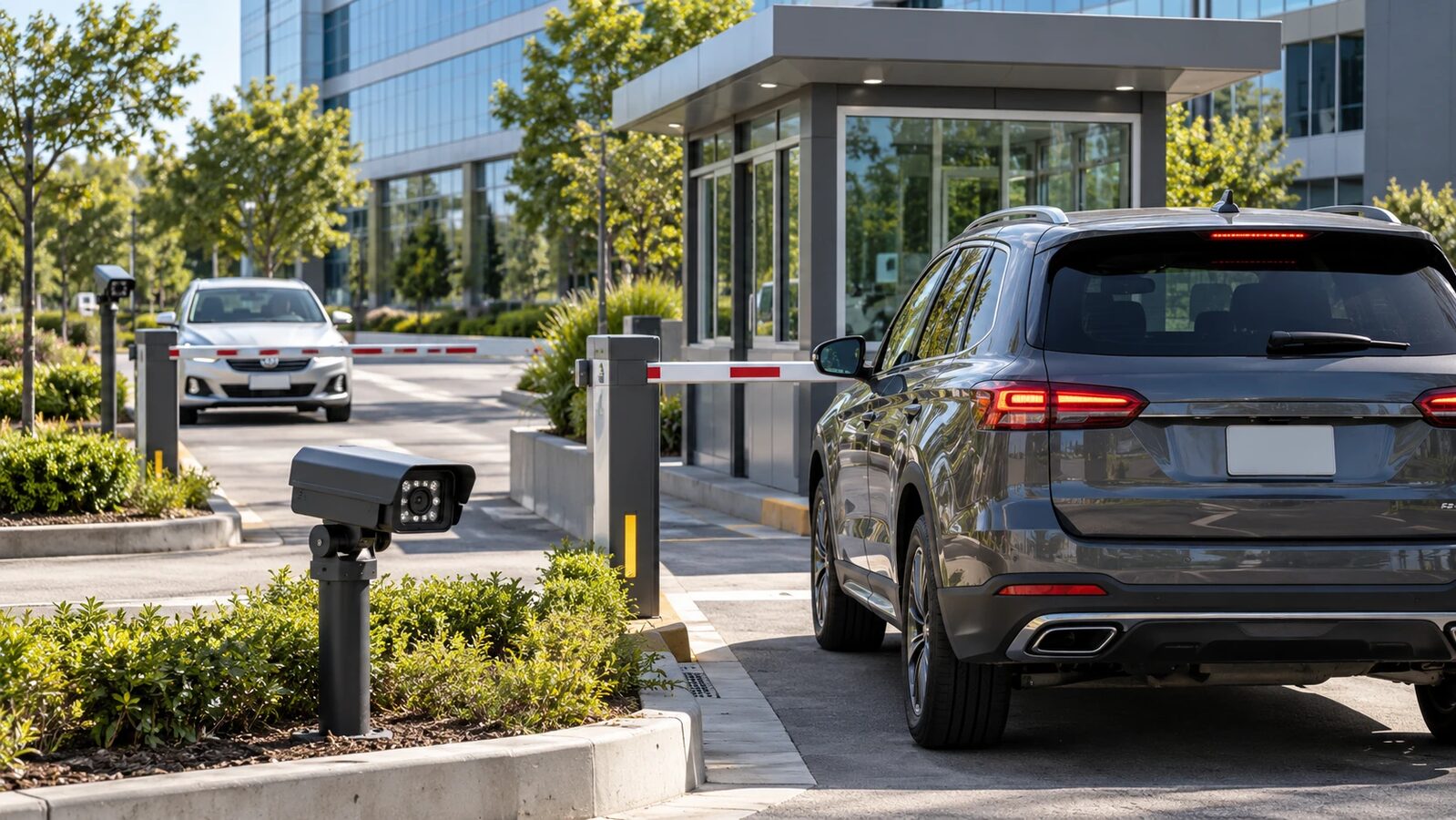
The parking entrance is often the first point where a person reaches a corporate site, yet it is frequently the least integrated. Employees wait at gates with badge readers that are awkward to reach from a car, visitors arrive unannounced, and when something goes wrong the security team has hours of video and no quick way to find a vehicle. License plate recognition (LPR) turns that entrance into a known, searchable point of arrival.
The problem
Typical issues at parking and vehicle entries include:
- Slow arrivals, with queues at gates and reception desks at peak times.
- Unknown visitors, where hosts forget to tell security or the front desk who is coming.
- No vehicle record, so investigations of a damaged car, a theft or a suspicious vehicle depend on scrubbing video manually.
- Separate systems for parking, visitors and security that do not share information.
The approach
LPR cameras read plates as vehicles enter and leave, and the security platform compares each read with lists that the program defines.
Cameras at the right points
Dedicated LPR cameras are placed at garage entries, gate lanes and, where useful, exits. They are mounted and angled for the plate, not the scene, with infrared illumination for night reads. A separate overview camera often captures the vehicle and driver context.
Lists that drive actions
- Employee and permit lists can open a gate or simply log arrival, depending on policy.
- Visitor lists are populated from the visitor management system when a host registers a guest, so reception is notified when the guest arrives.
- Watch lists flag vehicles of concern, such as those tied to a trespass notice, and alert the GSOC.
One platform for video and reads
Plate reads are stored in the VMS alongside the video, for example in Genetec Security Center with its AutoVu LPR capability, or in another platform the customer uses. Operators can search by full or partial plate, time and location, and jump straight to the recorded video.
Integration with parking and visitor systems
Where the parking or visitor platform supports it, the integration shares arrivals, permits and occupancy, so each system does not need its own camera and its own list.
What it takes to get right
- Design. Lane geometry, vehicle speed, plate angle and lighting decide read accuracy more than the camera model. A site survey checks each lane before cameras are chosen.
- Integration. List synchronization with HR, parking and visitor systems needs clear ownership: who adds, who removes, and how often.
- Data retention and privacy policy. Plate data can be personal information. The program should define what is collected, who can search it, how long it is kept, and how watch lists are approved and reviewed. Rules vary by state and country, so we recommend reviewing the policy with your privacy team and legal counsel before go-live.
- Testing. Commissioning includes day and night read tests on each lane, list actions (gate, notification, alert) and end-to-end checks of visitor arrival notifications.
- Reporting. Standard reports cover arrivals by entrance, visitor volumes, watch list hits and read quality, so problems such as a dirty lens or a misaligned camera are caught early.
- Third-party work. Poles, trenching, gate operator wiring and electrical supply are typically handled by the customer's electrical and civil trades, and network ports and VLANs by customer IT, unless IoTHS is contracted for them.
Where it fits
LPR suits corporate campuses with structured parking, sites with gated vehicle entries, and programs that want a better visitor experience without adding staff at the gate. It works well as an extension of an existing VMS rather than a separate system.
Next step
Contact us to review your vehicle entries and visitor process, or read more about our video solutions.
Talk to an engineer
Short call, quick requirements pass, and a recommended next step you can act on.
Contact us