
The Next Surveillance Decision: Open vs Locked In
What ONVIF Profile V means for cloud video, and seven things owners should write into a surveillance specification now to keep their options open.
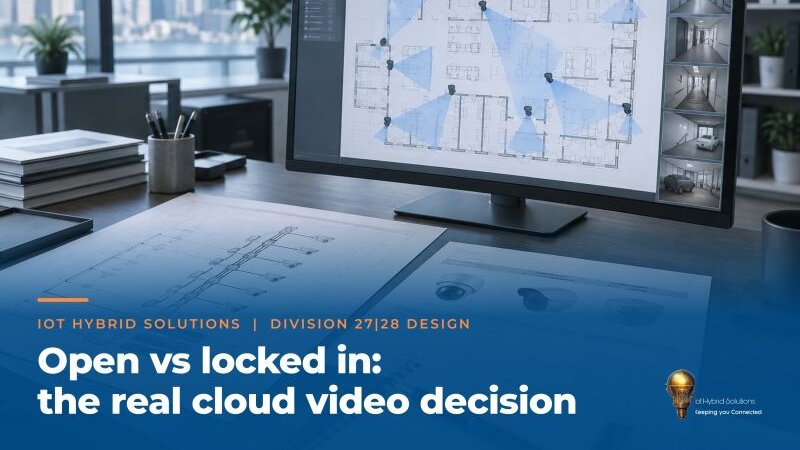
The next surveillance decision is not cloud vs on premises. It is open vs locked in.
ONVIF published the Profile V release candidate in July 2026, a draft standard for cloud video: cameras making secure outbound connections to a cloud VMS without port forwarding or VPN, WebRTC live streaming, OAuth 2.0 authorization, and recordings encrypted before they land in cloud storage such as S3 or Azure Blob. It can be combined with the existing ONVIF profiles for hybrid designs.
What we tell owners to put in a specification now
- Require standards-based interoperability, not a single vendor ecosystem.
- Ask who holds the recordings and the encryption keys.
- Confirm the cameras can be reused if the cloud VMS changes.
- Model uplink bandwidth and outage behavior before you remove local recording.
- Separate real ONVIF conformance from marketing claims of "ONVIF compatible".
- Design the hybrid around operations, not around a cloud subscription.
- Treat Profile V as a release candidate. Finalization is expected around year end, so write it as a direction, not a guarantee.
Moving video to the cloud should not mean giving up control of your cameras, your recordings or your next platform choice.
Related

Before We Price a Camera System, We Build the Storage Math
How we size video storage per camera before quoting, so a 30-day retention promise is still 30 days after the system goes live.
Read more
Creating an Optimized Surveillance System
A one-size-fits-all surveillance deployment usually leaves gaps. A tailored design, based on risk, environment and operational workflows, delivers better coverage, stronger performance, and a system that scales.
Read more
Integration Protocols for Unified Systems
A practical primer on the protocols that connect modern security platforms: APIs, event/webhook patterns, logging standards, and device-layer comms like BLE/NFC.
Read moreTalk to an engineer
Short call, quick requirements pass, and a recommended next step you can act on.
Contact us